The Best Creatives I Know Are Bilingual: Fluent in Words and Pictures
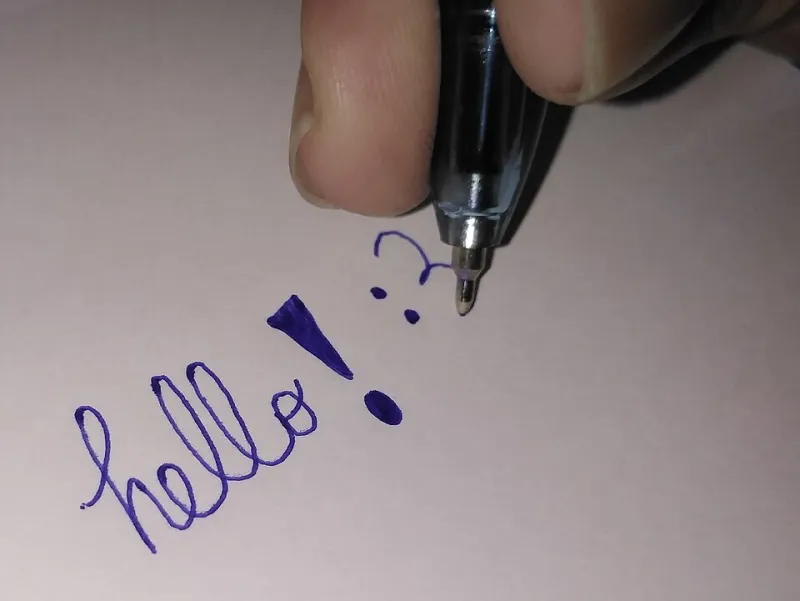
Photo: Philsacor, CC0, via Wikimedia Commons
I have a confession: for years, I introduced myself differently depending on the room. At design meetups in Brooklyn, I was 'a designer who sometimes writes.' At editorial mixers, I was 'a writer who dabbles in design.' I was terrified that claiming both would make me seem unfocused—unhireable.
I was wrong. Dead wrong. Being bilingual in words and pictures isn't a liability. It's the single biggest advantage I have, and I'd argue it's the most underrated skill in the American creative economy right now.
The False Wall Between Disciplines
American education loves categories. You're an English major or an art major. A copywriter or an art director. The industry reinforces it: separate departments, separate job titles, separate salary bands.
But the work that stops people mid-scroll almost never respects those walls. Think about the brands you actually love. Apple's product pages read like short stories set in Helvetica. Mailchimp built an empire on a voice—playful, warm, slightly weird—that's as much a design decision as their illustrations. Jessica Hische didn't become 'the intern' by choosing letters over words; she became legendary because she treats letterforms as language.
The wall is fake. The best work climbs over it.
Why the Hybrid Brain Wins
Here's my theory, after a decade of straddling both: writing teaches you to think in sequence. Design teaches you to think in space. Most problems—products, pitches, campaigns—live in both dimensions at once.
When I write, I catch myself doing designer things: checking hierarchy, creating rhythm, cutting anything that competes for attention. When I design, I do writer things: asking what's the argument here, what's the topic sentence of this page, what's the punchline?
Each discipline is a debugging tool for the other.
Five Exercises to Cross-Train Your Brain
You don't need a career change. You need fifteen minutes a day and some willingness to be bad at things. Try these:
1. Describe a logo in exactly 25 words. Pick any famous mark—the Nike swoosh, the Target bullseye. Writing forces you to articulate what the design is actually saying. You'll never look at brand marks the same way.
2. Storyboard your next email. Before writing a single word, sketch it as three panels. What's the establishing shot? The turn? The close? Structure first, sentences second.
3. Redesign a paragraph. Take dense copy—terms and conditions, a press release—and redesign it. Line breaks, emphasis, white space. You'll discover that typography is editing.
4. Write the alt text for your life. Caption five photos from your camera roll as if describing them to someone who can't see them. It's empathy training for both crafts.
5. Swap tools for a week. Writers: open Figma. Designers: open a blank doc. Make something small and finished. The discomfort is the point.
The Career Case for Being 'Unfocused'
Let's talk money for a second, because idealism doesn't pay rent in Chicago or anywhere else. Hybrid creatives are disproportionately valuable in small teams and startups, where one person who can write the landing page and design it is worth two specialists. AI tools are compressing the market for pure production work—but taste, judgment, and the ability to hold a whole story in your head? That's the durable stuff.
Recruiters I've talked to keep saying versions of the same thing: 'I can teach someone our design system. I can't teach them to write.'
Stop Apologizing for the And
I introduce myself the same way everywhere now: I'm a writer and a designer. No hedging, no apologies.
If you've been hiding one craft behind the other, consider this your permission slip. The intersection of words and visuals isn't a compromise—it's where the interesting work lives. Go claim your spot in it.