What Should They Feel When the Lights Come Up? The Kickoff Question I Stole From a Theater Director
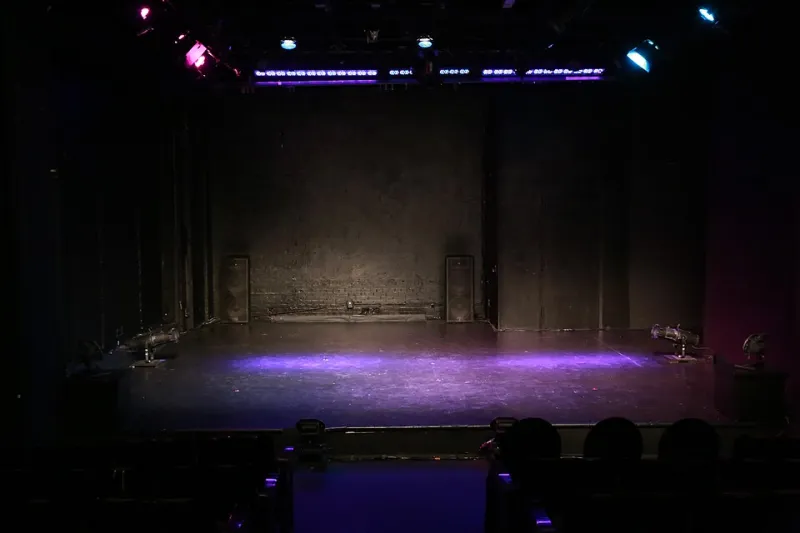
Photo: Anthony Sertel Dean, CC BY-SA 4.0, via Wikimedia Commons
In 2019, before design paid my rent, I was doing posters for a community theater production in Minneapolis. Small house, folding chairs, a budget that covered printing and nothing else. The director was a woman named Deb who had been doing this for thirty years and had zero patience for anything vague.
At the first read-through, she didn't talk about blocking or cues. She asked the cast one question: when the lights come up and the audience sees you for the first time, what do you want them to feel?
The room went quiet. Then people started answering, badly at first (“excited?”) and then better — uneasy, warm, like they've walked into a conversation that was already happening. Deb wrote every answer on a whiteboard and left it up for six weeks.
Why that question beats a list of deliverables
A brief tells you what's needed. It almost never tells you what the thing should do to a person.
Most kickoff calls I've been on go straight to scope: page count, revision rounds, deadline, who signs off. All necessary. All logistics. Somewhere around minute forty, everyone hangs up feeling aligned and nobody has said out loud what the work is supposed to make someone feel.
That gap shows up later, in round two, when the client says the design is “fine” and nobody can articulate why fine isn't enough.
The four questions I ask now
I've adapted Deb's question into a short set I ask before I write a brief. I ask them in the same order every time. It takes about ten minutes.
- When this is finished and working, what should someone feel in the first five seconds of seeing it?
- What should that person be able to say to their boss in one sentence, without you in the room?
- What should they not have to think about at all?
- What's the feeling in the room when it gets approved?
That last one catches things the others miss. I once had a client answer “relief, honestly” — because the previous project had gone badly and nobody wanted to relive it. That's a creative constraint, and I would never have found it in a statement of work.
A script, if you want to steal it
The exact wording matters less than asking all four before you show anything.
“Before we get into scope, I want to make sure I'm designing for the right moment. When someone opens this for the first time and it's working the way you hope — what are they feeling? Take a second. It can be something small.”
Some clients go blank. That's normal. If they stall, I offer a menu rather than a definition: “Does it feel more safe, or more energized, or more calm?” Nine times out of ten they pick one and then correct me, and the correction is the useful part.
What I don't do is accept a brand word as an answer. “Premium” and “modern” describe a category, not a feeling. I'll ask once, gently: “And what does that feel like when you're standing in front of it?” Then I move on and bring it back to them later.
Turning the answer into actual decisions
This is where the question earns its keep.
On a housing nonprofit project, the answer was: “relief. Like finding the form you needed already filled out.” That one sentence killed about six ideas. It meant short sentences, plain language, generous type, no stock photos of hands clasping, and zero scroll-jacking. Every later disagreement got resolved by pointing back at it. When someone on the approval chain wanted a big emotional hero image, I could ask — without being a jerk — whether that image produced relief or produced work.
On a software project, the answer was “competence without a tutorial.” Different feeling, opposite design. We cut the onboarding carousel, put one primary action on every screen, and stopped explaining things the user could see for themselves. The client called the first review “quiet,” which in that context was a compliment.
What I do with the answer afterward
I write it at the top of the brief, in the client's own words, with quotes around it and their name after it. It stays in the deck. I read it before every review, out loud, which sounds ridiculous and works.
It also changes how I disagree with people. Arguing about a color is a taste fight nobody wins. Arguing about whether a choice gets us closer to “relief, like finding the form already filled out” is a conversation with a referee.
When it falls flat
It doesn't always land. Some clients are outsourcing the emotional call to you, and that's fine — that's part of what they're paying for. In those cases I'll draft the feeling myself, present three versions, and let them react. Reaction is easier than invention for most people.
But I still ask. Because the worst outcome isn't a client who can't answer. It's one who can, and nobody thought to ask until the work was already wrong.