In Praise of Invisible Work: The Project Nobody Saw Taught Me the Most
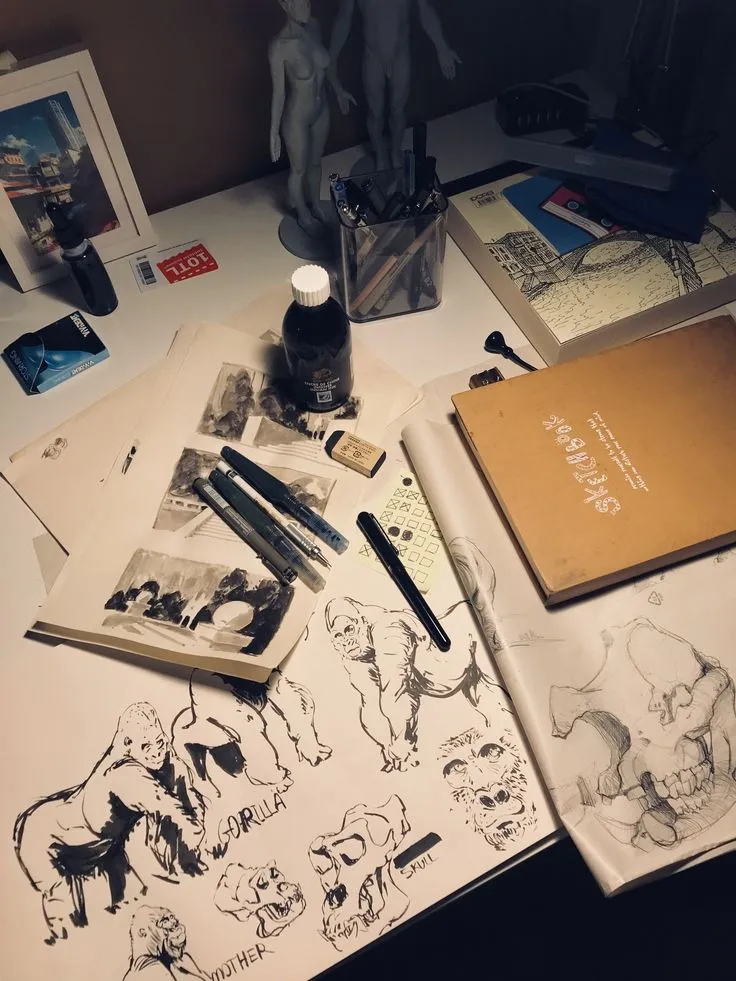
Photo: handmade zine sketchbook messy desk creative side project, via i.pinimg.com
Can I tell you about my favorite project of the past year? It's not on my portfolio. No client paid for it. Exactly three human beings have ever seen the final thing, and two of them are related to me.
I redesigned the reservation flow for a tiny bakery in my neighborhood—not as a job, just because the owner mentioned she was drowning in phone orders and I'd had a coffee and couldn't help myself. I built her a simple order form, a little inventory sheet, a logo touch-up. Took me three weekends. Nobody will ever hire me because of it. It taught me more than any client project I did all year.
The Museum Problem
Here's the thing about being a creative in 2025: everything is a portfolio piece now. Every project gets posted, polished, and performed. Instagram carousel, Behance case study, LinkedIn recap with lessons learned. We've all become curators of our own little museums, and the work knows it.
That changes the work. When you know everything will be seen, you start designing for the screenshot. You pick the safe direction. You sand off the weird edges that might not land. You spend three days on the presentation and three hours on the thinking, when honestly it should be the other way around.
The museum version of you takes fewer risks, because risk doesn't photograph well.
What Invisible Work Lets You Do
The bakery project had no stakes, and that's exactly why it was valuable. I could try a typeface I'd never dare pitch to a client. I could build something janky and iterate without anyone watching. I talked to an actual small-business owner about her actual problems—problems no creative brief ever captured—and designed against reality instead of against a deck.
I've started calling this my shadow portfolio: the collection of work that exists off the record. A friend's podcast cover. The internal spreadsheet tool I made for tracking my own pitches that is genuinely, embarrassingly over-engineered. A zine about highway rest stops that I abandoned at page six and don't regret at all, because the six pages taught me something about pacing.
Every working creative I admire has one of these. They just don't post about it, which is kind of the whole point.
Start Your Own This Weekend
If you want a shadow portfolio but don't know where to begin, here's the low-stakes starter pack:
- Redesign something that annoys you locally. A restaurant menu, a church bulletin, the parking sign on your block. Real constraints, zero pressure.
- Make a tool for yourself. A budget tracker, a reading log, a template for something you do repeatedly. Solving your own problem is the purest design brief there is.
- Do one free thing for one real person. A friend launching an Etsy shop, a cousin's band needing a flyer. One person, one deliverable, no invoice.
- Start something you're allowed to abandon. A zine, a newsletter with no subscribers, a poster series about your neighborhood. The permission to quit is what makes it fun.
The rule is simple: it can't be for a client, it can't go on your portfolio, and you can't post it. If you break a rule, fine—it just graduates into the museum, and you start a new shadow project.
The Career Case for Secrecy
I know how this sounds in a piece written for a site with my name on it. But I'd argue invisible work is a career asset, not a distraction. It keeps your risk muscle from atrophying between client projects. It fills the gaps where client work gets conservative. And occasionally—like when the bakery referred me to two other shops on the same street—the shadow portfolio hands you real work anyway, earned through craft instead of self-promotion.
Make something nobody will ever see. You might be surprised what it shows you.