The Graveyard Folder That Became My Best Sales Pitch
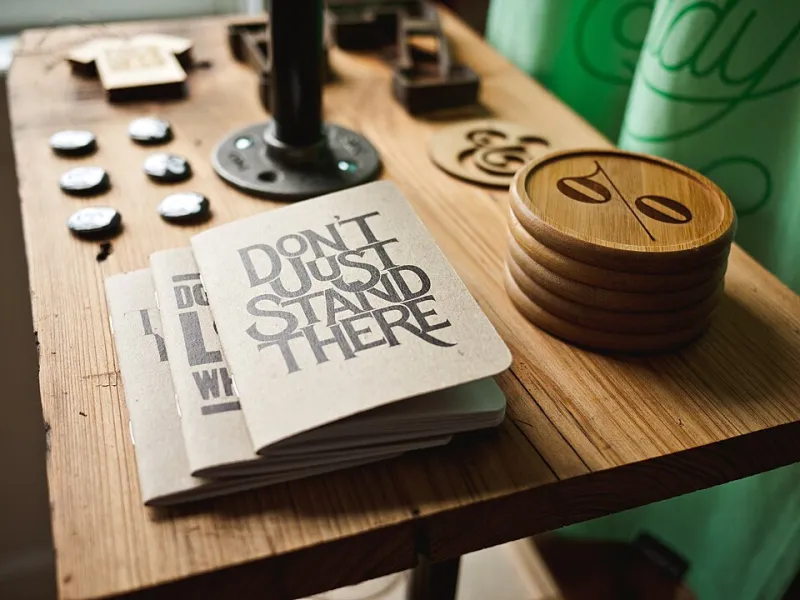
Photo: www.Pixel.la Free Stock Photos, CC0, via Wikimedia Commons
There's a folder on my hard drive called GRAVEYARD, and until about two years ago, it was the most secret place in my business.
Inside: the logo directions a coffee brand in Austin never saw. The website layout that lost to a safer option. A packaging concept I still think about at 2 a.m. Roughly six years of work that technically happened but, as far as my clients knew, never existed.
I used to think this was normal. It is normal. It's also a waste.
The Day I Broke the Rule
The shift happened mid-project, honestly. I was rebranding a small DTC skincare company out of Portland, and I'd developed three directions. The client picked one—fine, that's the job—but instead of quietly archiving the other two, I attached them to my delivery email with a one-line explanation of why I thought they lost.
Her reply came in under an hour: *"Wait, you made all of this? Why didn't you show me sooner?"
That question stuck with me. Not because she wanted to switch directions—she didn't. But something changed in how she talked about me afterward. She wasn't just a client who'd hired a designer. She was a client who'd seen the machine running.
Why Hiding the Rejects Backfires
Here's the thing nobody says out loud: when clients only see the winning concept, they assume the winning concept is all you had. Which means every revision request feels, to them, like you're improvising. Like the budget for ideas is infinite because ideas are cheap.
When they see the three directions that didn't make it—the reasoning behind each one, the craft in the details—they understand something different: selection is part of the service. You're not generating options on demand. You're running a whole process and bringing them the strongest survivor.
The rejected work is proof of effort that the polished deliverable can never provide on its own.
The Three Ways I Use the Graveyard Now
1. The concept reveal, expanded. In presentations, I stopped showing one recommended direction. I show the full field—the picks and the cuts—with a short note on what each one would've cost the brand. Clients make faster decisions when they can see what they're saying no to. Fewer revision spirals, fewer "can we try something totally different?" emails.
2. The trust-building follow-up. A week after a project wraps, I send a short "post-mortem" email: the directions that didn't ship, why they didn't, and what I learned. It costs me twenty minutes. It has generated more referrals than any LinkedIn post I've ever written, because it's the kind of email people forward to their founder friends.
3. The portfolio resurrection. This is the part that felt riskiest. Some of my favorite case studies now lead with the rejected concept. "The direction the client didn't choose—and why I still love it" is a weirdly magnetic headline. Recruiters and collaborators don't want a highlight reel; they want to see your judgment. Judgment lives in the cuts.
What Changed, Measurably
I won't pretend I ran a clinical trial. But since I started doing this:
- Revision rounds on branding projects dropped from an average of four to about two.
- Clients quote me more accurately to prospects. I've heard it secondhand: "She shows you everything, even the stuff that doesn't work."
- Two of the graveyard concepts got licensed later by entirely different clients. Dead ideas, resurrected, paid twice.
That last one deserves its own sentence. Your rejected work is inventory. The direction that was wrong for the Portland skincare brand might be exactly right for a wellness startup in Chicago. I've stopped thinking of the graveyard as a graveyard. It's more like a lending library.
The One Caveat
Don't send rejects as an excuse to pad a deliverable. Clients can smell filler. The rejected concepts only build trust when the reasoning is honest—when you can articulate why they lost, not just that they exist. If you can't explain what a direction was for, it's not a reject. It's clutter. Leave it in the folder.
Start Small
If this sounds like a lot, start with one thing: the next time a project wraps, add a single paragraph to your closing email. "For the curious—here are the two directions that didn't make the cut, and a sentence on each." That's it.
The worst case is that a client sees more of your thinking. The best case is that they never look at you the same way again.
The graveyard folder is still on my hard drive. But these days, it's less of a cemetery and more of a greenhouse. Things go in there to wait—not to die.